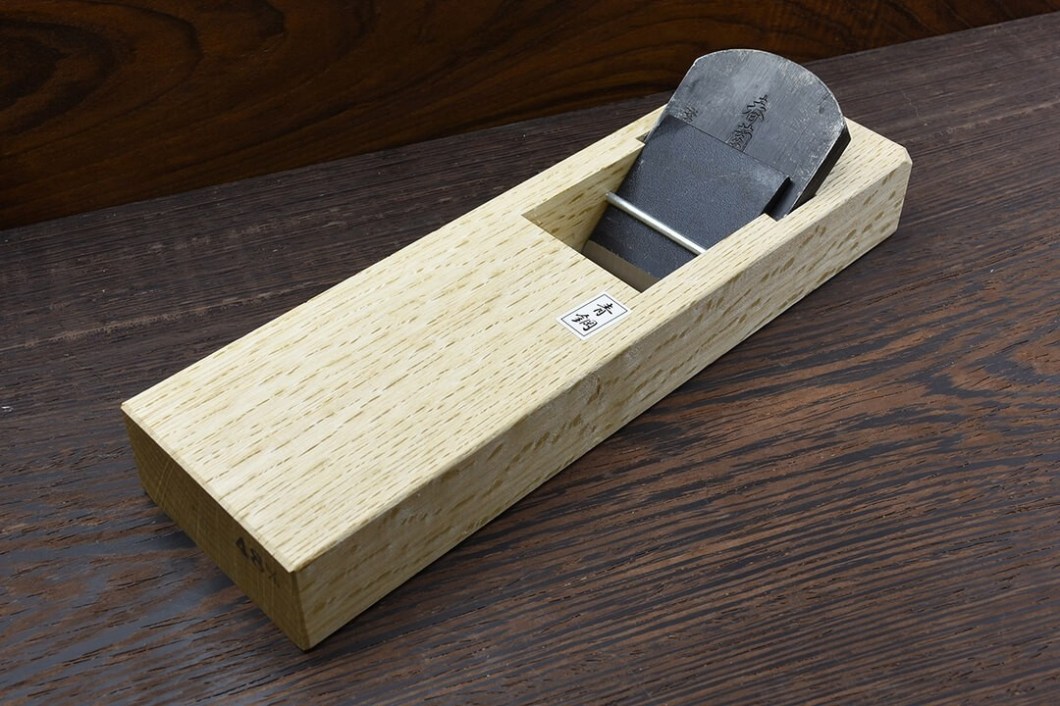
 The plane is one of the most important tools in woodworking. In their various sizes and configurations they allow the processing of wood from resawn boards to finished furniture. Western carpenters today make use of iron bodied planes, which have been in use since the mid 1860s, however in Japan and other eastern countries, wooden block planes are still the norm. Japanese block planes consist of a body known as a Dai and a blade known as a Kanna. The difference between western and Japanese planes is that in western planes the blade is held in place by a lever clamping system, with a dial for fine adjustments and often another lever for adjusting the blade angle, whereas the Japanese plane uses just a wedge shaped blade to create tension and hold the blade in place. The blade is hammered into the Dai and adjusted to depth using a mallet. When the blade is to be removed, the back edge of the Dai is struck with the mallet, and the shock causes the blade to “jump” gradually out of the slot. Despite it’s seemingly more primitive design, the Japanese style of plane is capable of extremely fine work when used by a skilled craftsman. In Japan they actually have planing competitions, whereby people compete to take the thinnest shaving of wood with their personal set up. The thinnest shaving ever recorded was 3 microns thick, which is ten times thinner than a human hair. Planes are used even more extensively in Japanese woodwork than in western carpentry, as they are used to cut the final finish into wood in the absence of sandpaper. The finish on Japanese furniture is often extremely fine and long lasting, as rather than finely roughing up the wood surface as sandpaper does, honed planes cut individual wood fibres.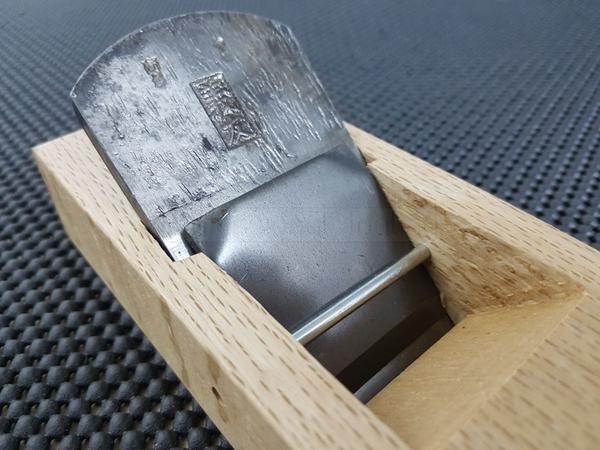
- Comment
- Reblog
-
Subscribe
Subscribed
Already have a WordPress.com account? Log in now.
 Handmade