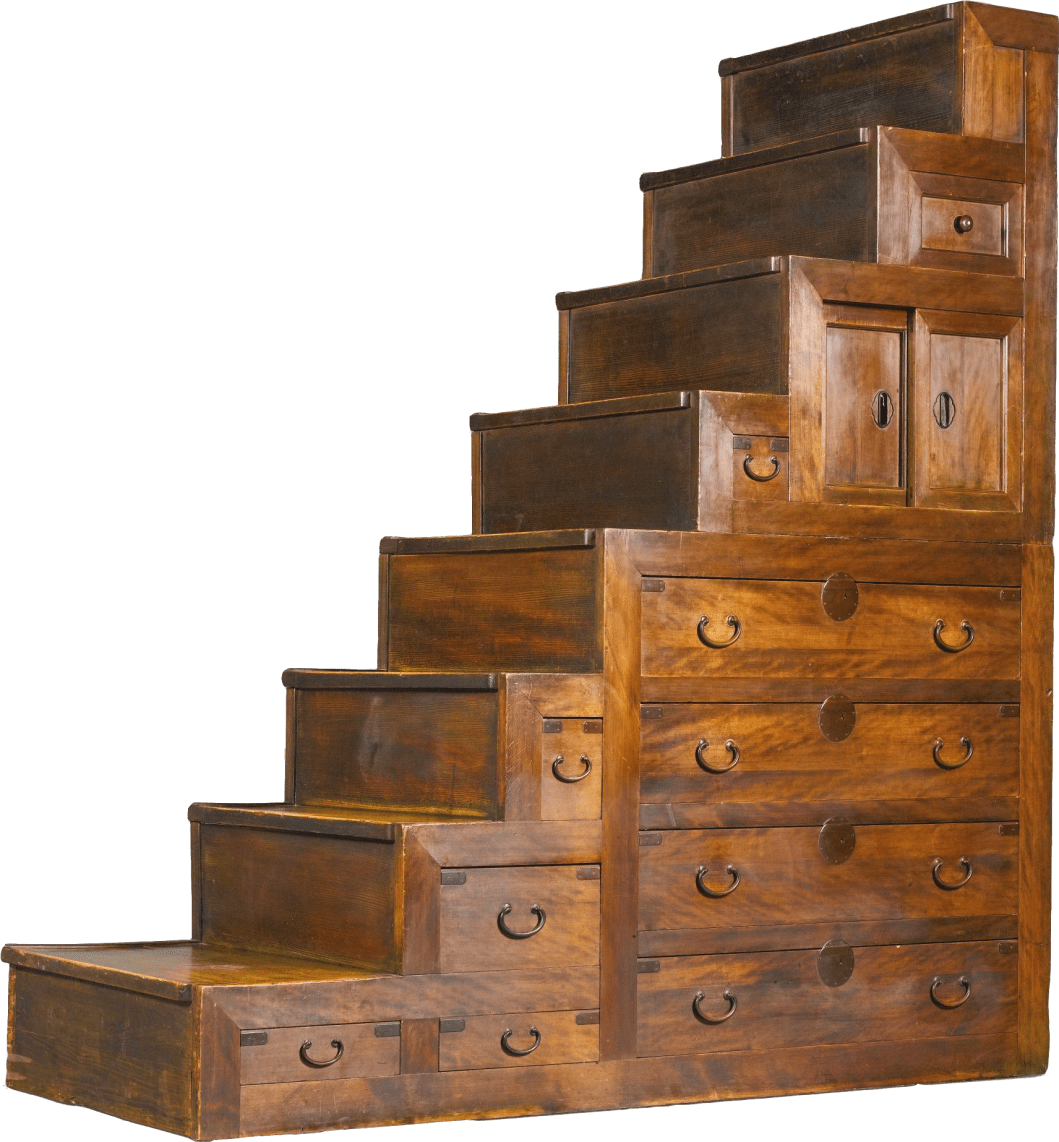
 Kaidan Dansu are a form of chest used in Japanese cities as early as 1702. Kaidan Dansu translates literally to Stair Chest. They were used in cities such as Edo (present day Tokyo), to make maximum use of limited space. The chests were independent of the buildings architecture and were usually made in multiple sections so they could be moved or replaced relatively easily. The idea of storage beneath stairs is not unique to japan, however I find this take on the idea to have a unique charm. The wood used in Japanese chests varied depending on the purpose of the chest, for example Paulownia was often used for clothes chests as it absorbed moisture from the surrounding air and kept clothes in good condition. Elm was often used in drawer fronts due to its attractive colour and grain. I have been unable to find out what kind of wood was used for the structure of Kaidan Dansu but given that it is a structural piece one can assume that it is a wood with high tensile strength. The chests would have been designed bespoke for the building they were commissioned for, and so the combination of doors and and drawers, and the sizes of the compartments could be optimized with respect to the size of the building and for its purpose. As an example, an apothecary may have chests with many small drawers, whereas in a home it may have large sliding doors for storing bedding or other household items. With demand for space becoming greater and land prices rising, it seems to me to be quite a relevant invention today.
- Comment
- Reblog
-
Subscribe
Subscribed
Already have a WordPress.com account? Log in now.
 Handmade